Your horse never lived in the machine. It lived on a card in your wallet. Working out how is most of what preserving this game has meant.
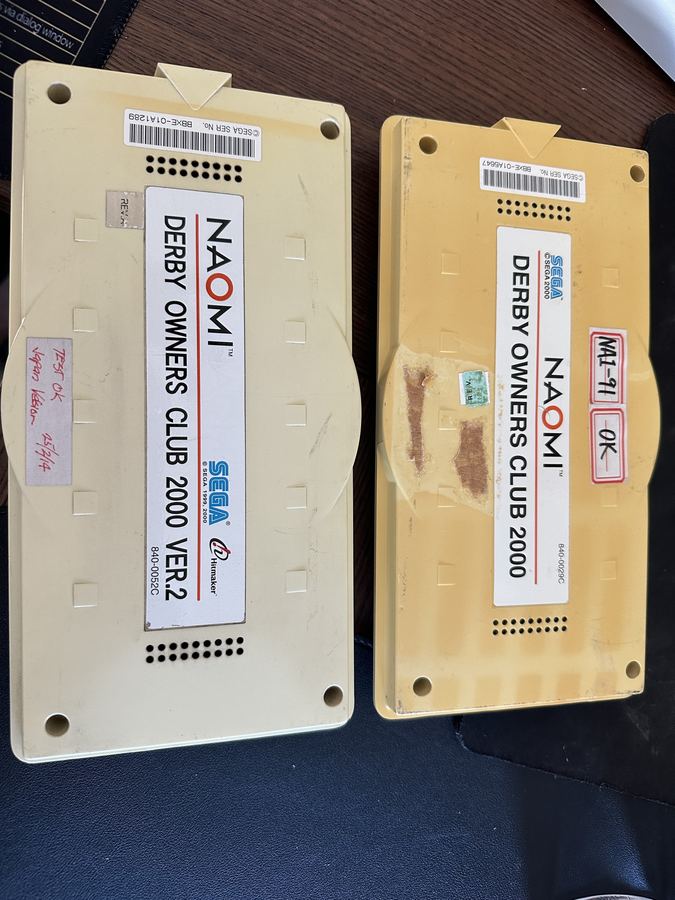
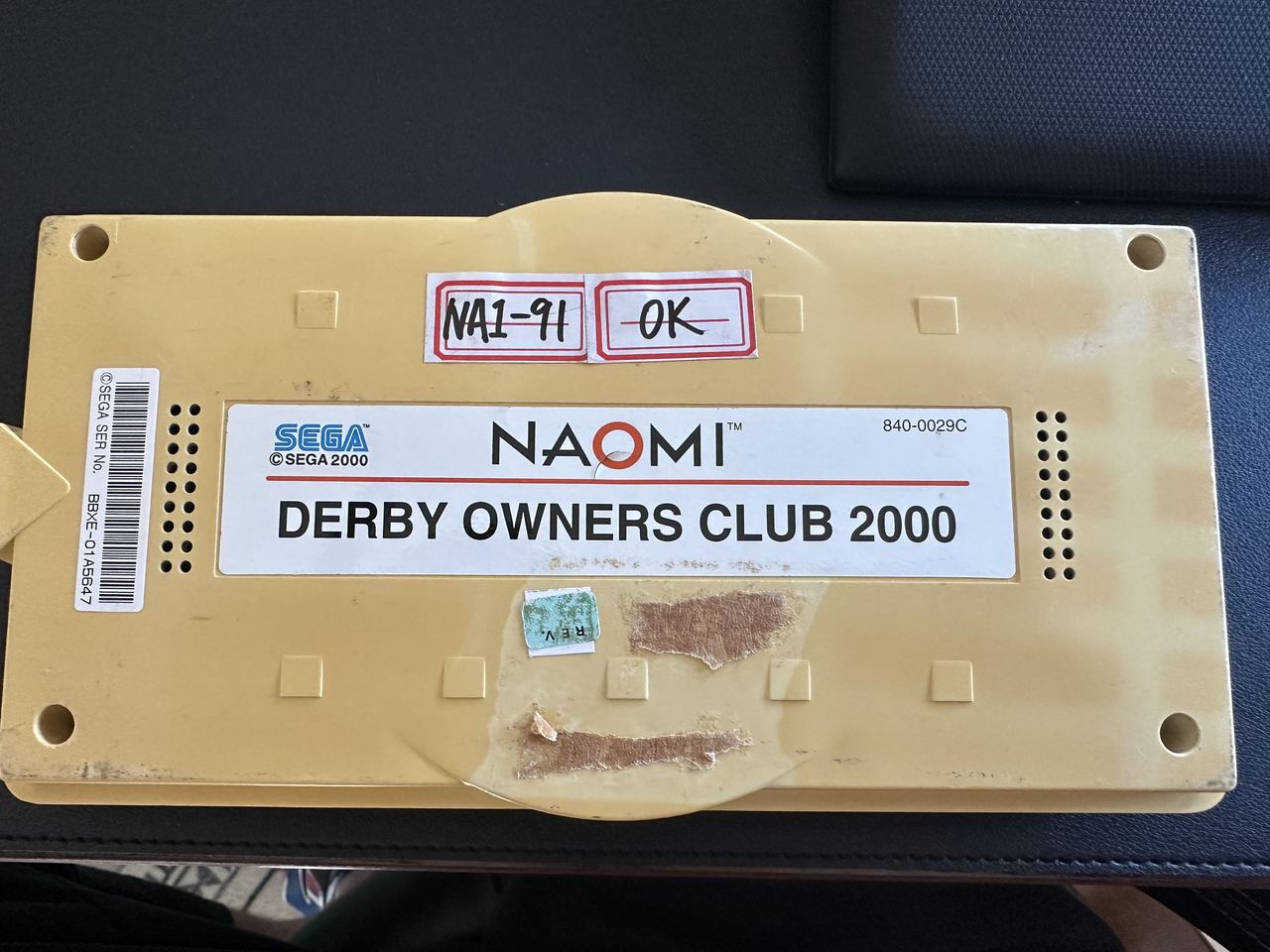
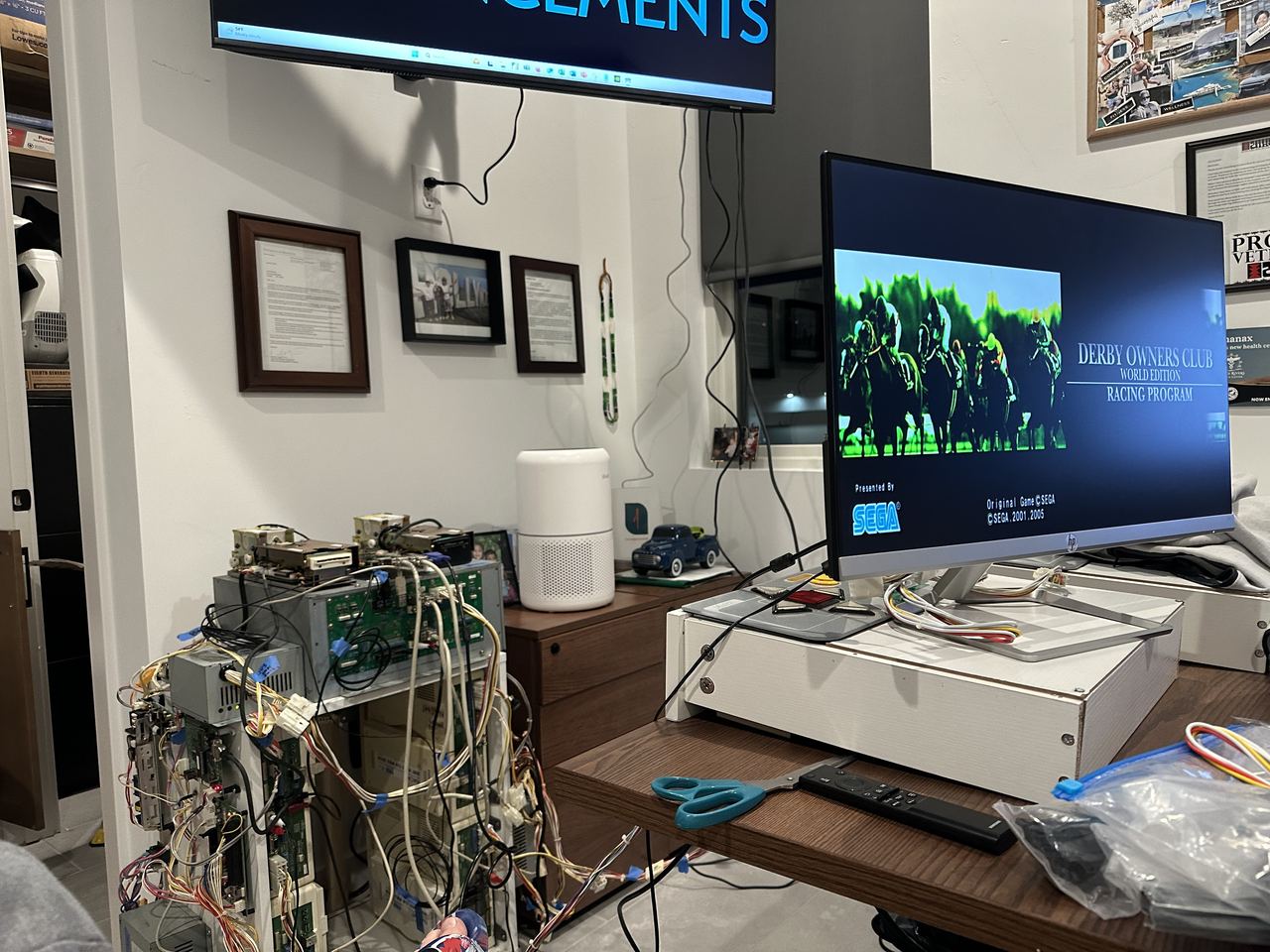
Derby Owners Club is not one program either. Four builds are preserved and running here: World Edition Rev C and Rev D, and the two Japanese releases, DOC 2000 and the original DOC '99. Each is a four megabyte program ROM, and they are genuinely different games underneath rather than translations of one another.
Some of what separates them only shows up by comparing the bytes. Rev C and Rev D turn out to be identical across all 244 horse records, which settles a long-running argument about whether the later revision quietly changed the roster. It did not. The Japanese builds differ far more: DOC '99 stores a horse in 28 bytes where the World Edition uses 32.
The thing that made Derby Owners Club special is also the thing that made it hard to preserve. Your horse did not live in the machine. It lived on a magnetic card in your wallet, and the cabinet read it back out when you returned.
Nothing about that layout was ever documented. Every field had to be worked out by hand against real cards: the three internal stats, the six externals, coat, pedigree, running style, hearts, and the complete record of every race the horse has run. That map is published openly, because a format only one person understands has not really been preserved.
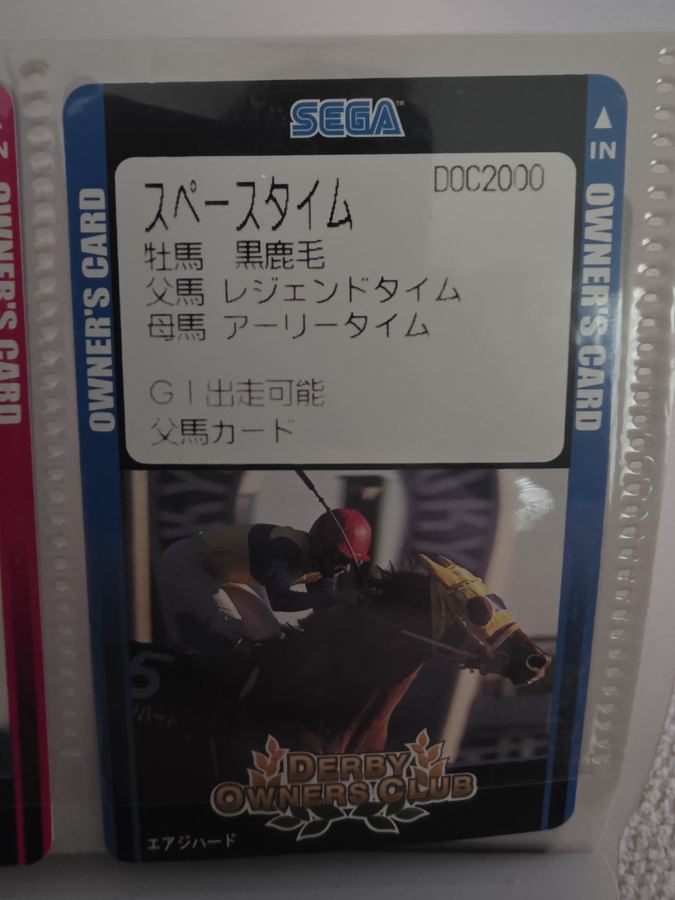
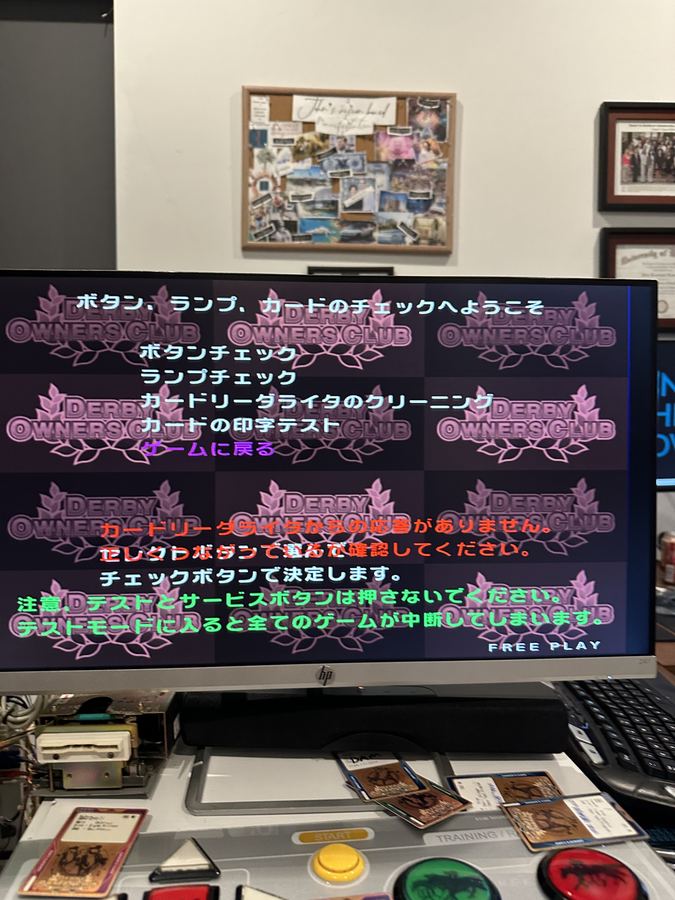
A World Edition reader refuses a Japanese card outright, and for a while that looked like a dead end. The two formats mark themselves differently in the same two bytes, and the Japanese layout stores kana names in fixed slots rather than the World Edition arrangement.
DOC '99 was the last to fall, held up by an assumption that its cards were marked the same way as DOC 2000's. They are not. Once that was found, both Japanese versions could read and write their own cards, and all four builds could finally save a horse and load it back.
Everything decoded gets published as something you can use rather than a document you have to trust: card readers and differs, breeding and feeding advisors, roster and track browsers, a ROM fingerprinter, and a cross-version diff. They run in the browser and read files you already have. Browse the tools.
This is the manual the game never shipped with, and it is the part the community actually uses.
The honest frontier is the race itself. We can read every byte of a horse and still cannot prove the arithmetic that turns those numbers into a finishing order. That maths is not stored as data anywhere. It is processor code, and reading it means disassembling the game's own instructions.
We know where it lives. We have the entry points. We have thousands of recorded races to test an answer against. What we do not have is the answer, and we would rather say so than publish a guess that sounds authoritative. If you read SH-4 assembly, we would genuinely like to hear from you.
New, September 2026: the Derby Owners Club II card, a format that was never documented and that Sega encrypted, has been decoded with the game's own code. The byte-by-byte map, tagged by confidence, is at The DOC II card: byte map and cipher.
 DOC
DOC