Derby Owners Club was never a single cabinet. Here is what the hardware actually is, what condition it turns up in, and what it takes to keep a row of it running.
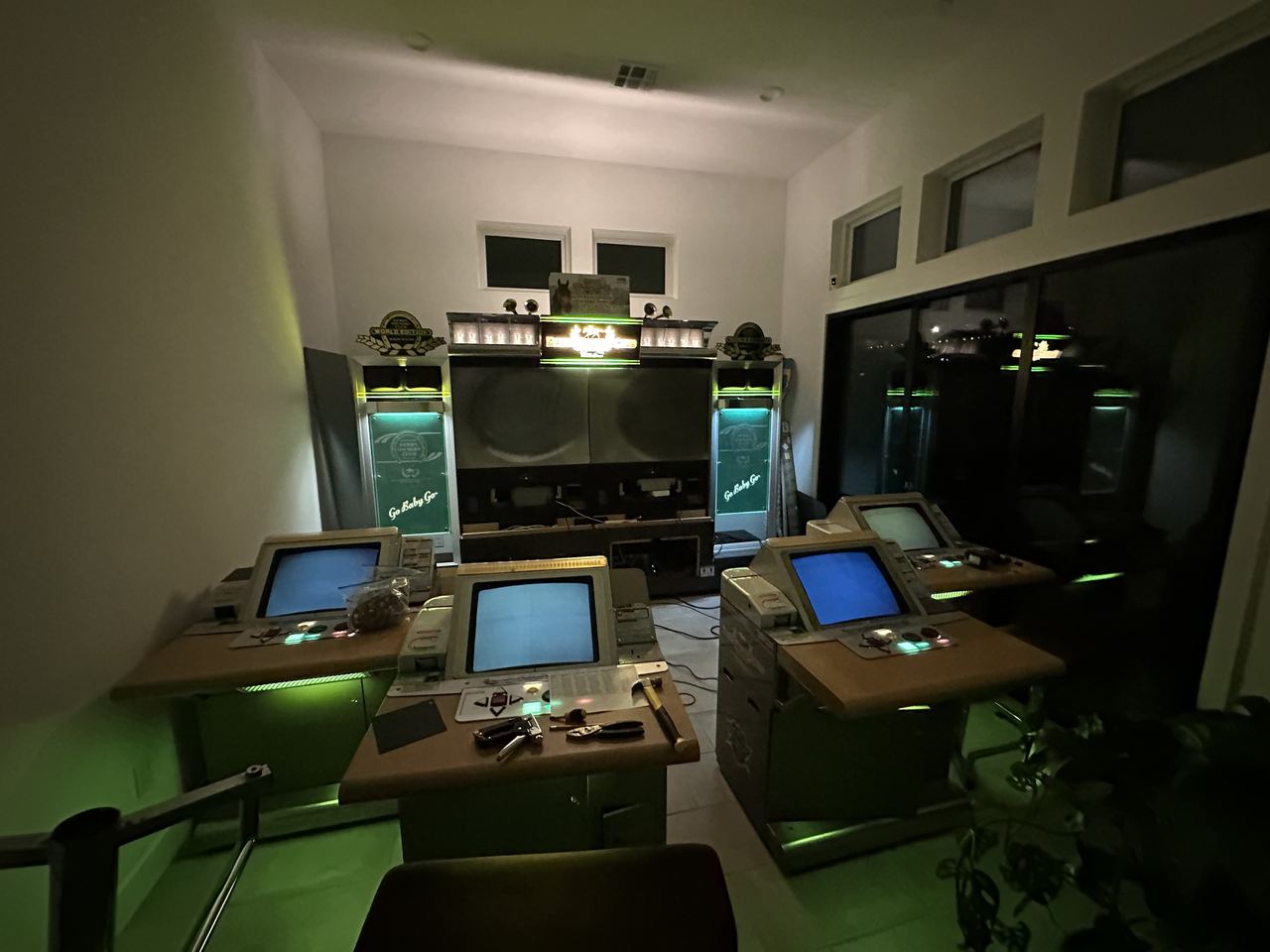
A Derby Owners Club installation is a main unit plus a row of player seats, and each seat is a separate arcade board on a network link. Sega sold four, six and eight seat configurations, and they do not all link the same way.
Count a full eight-player row properly and it comes to ten boards: eight satellites, one per seat, plus the main unit, which is not a single machine either. The main is a multiboard, a NAOMI stack that counts as two. Ten boards, one race, agreeing frame by frame.
That is why the game vanished so completely. A single cabinet is a manageable thing to save. A linked row is ten of nearly everything: power supplies, boards, monitors, card readers, and one network that has to bring them all up in the right order.
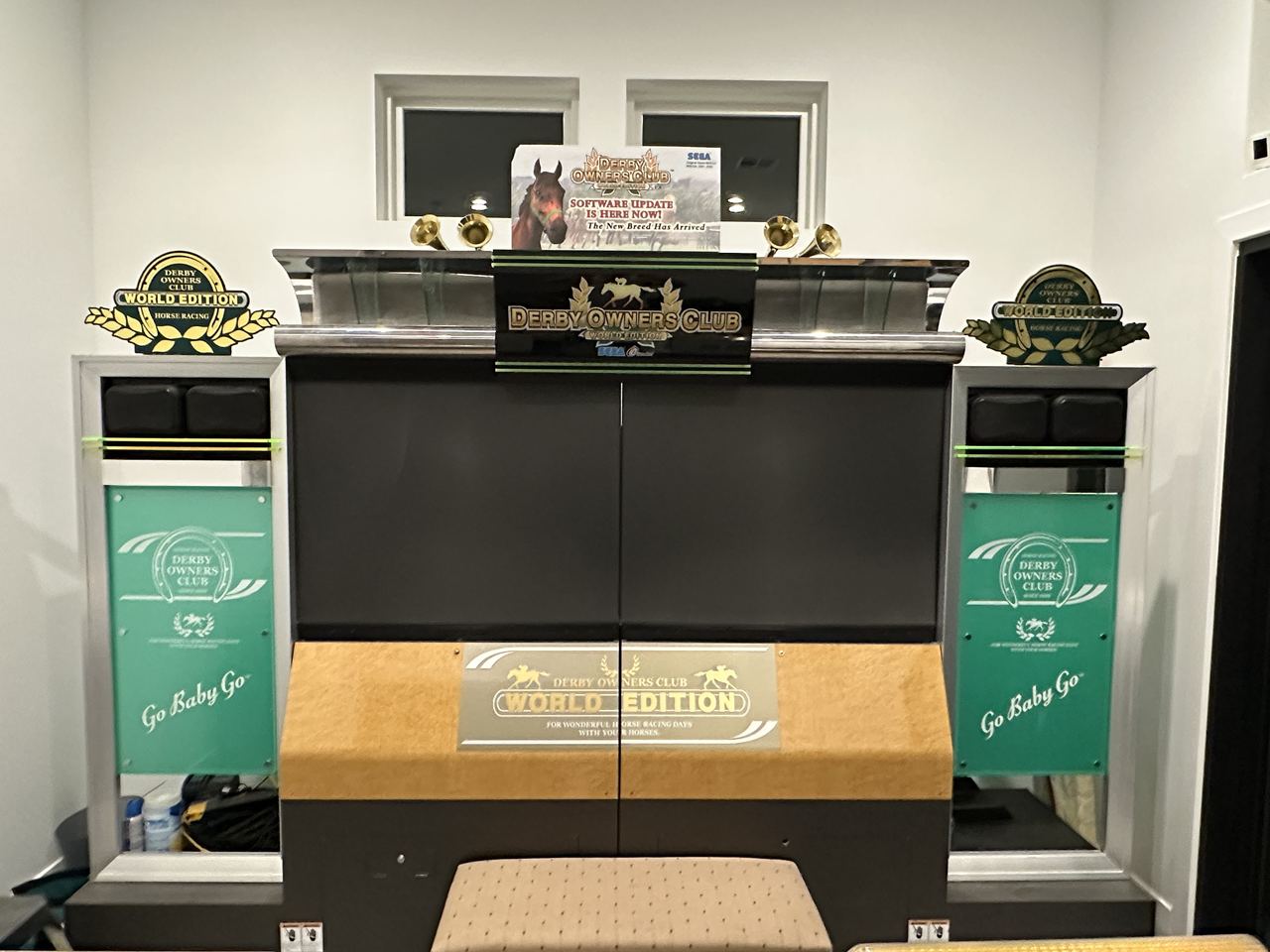
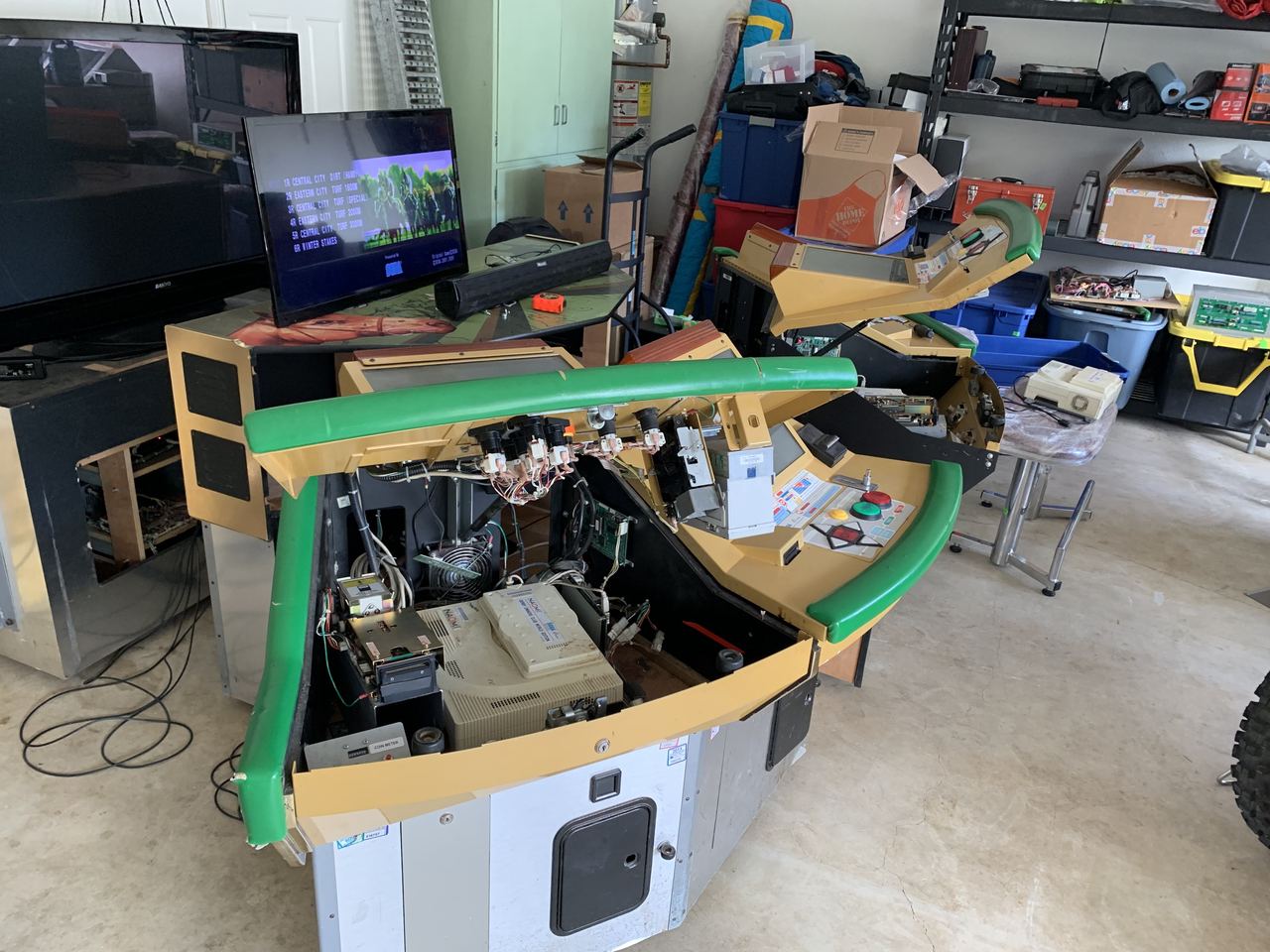
Surviving arcade hardware does not arrive working. It arrives on a truck, in pieces, after a decade somewhere dark. Cabinets come apart for transport and do not always come back together the way they left, and nothing is labelled for the person who has to reassemble it twenty years later.
The first job is always the same: get everything into one room, work out which loom belongs to which seat, and find out what still powers on.
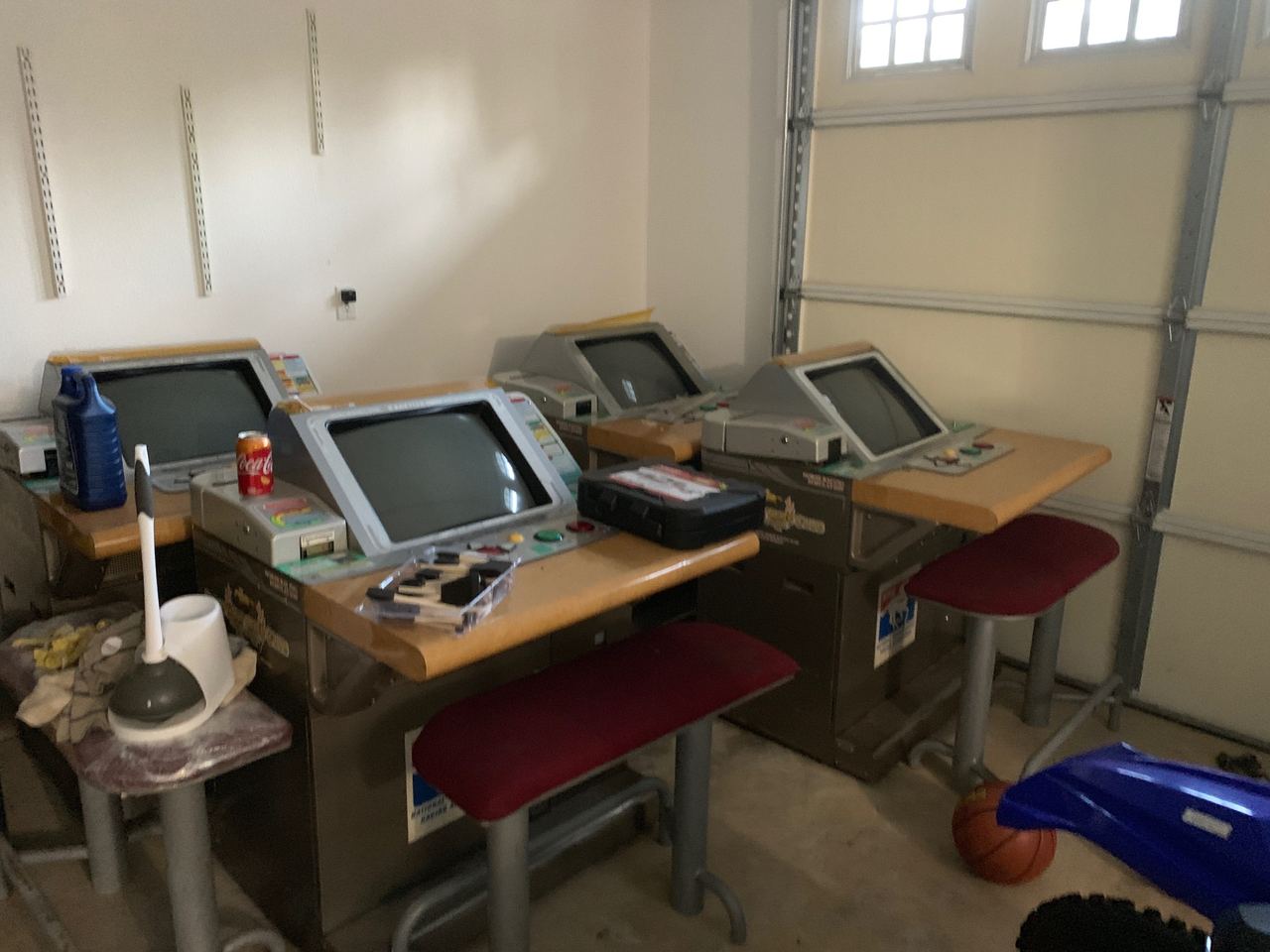
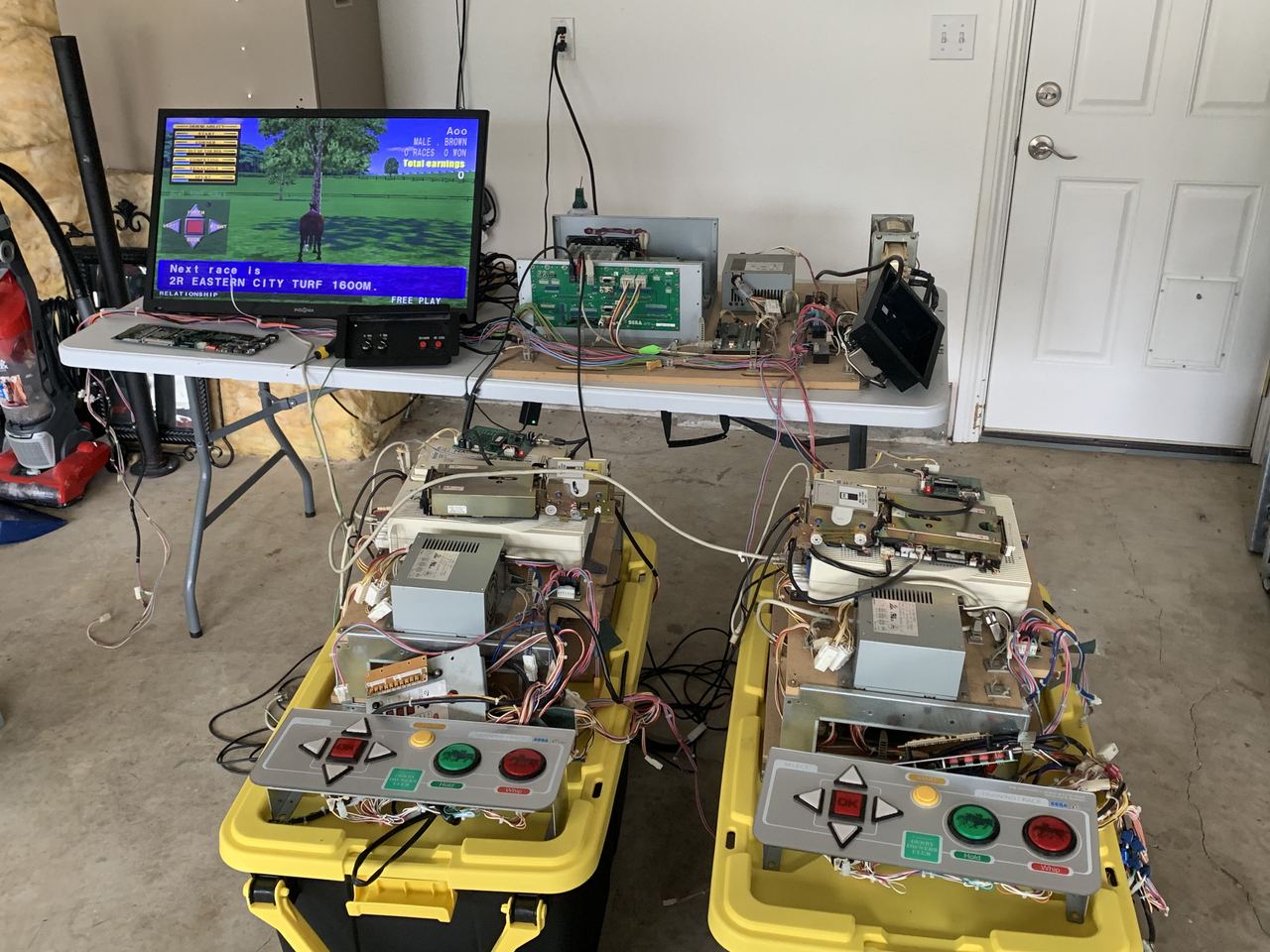
Seven complete Derby Owners Club setups live here:
The last two matter more than they sound. A machine without its cabinet is still a machine: it boots, it links, it reads cards, and it answers questions about behaviour that no amount of reading a ROM will. It is also how you test a board before committing it to a cabinet.
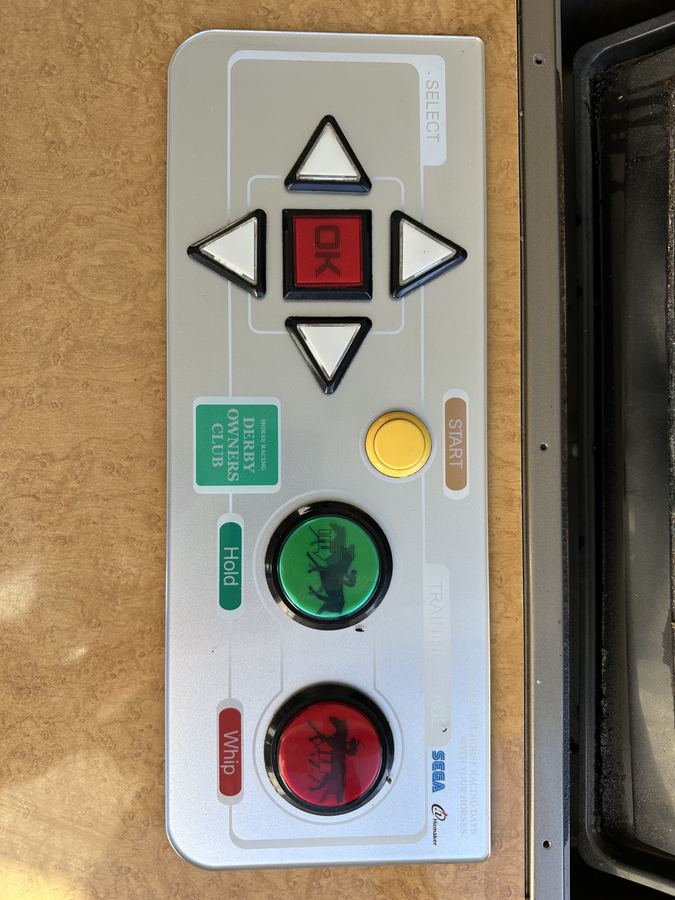
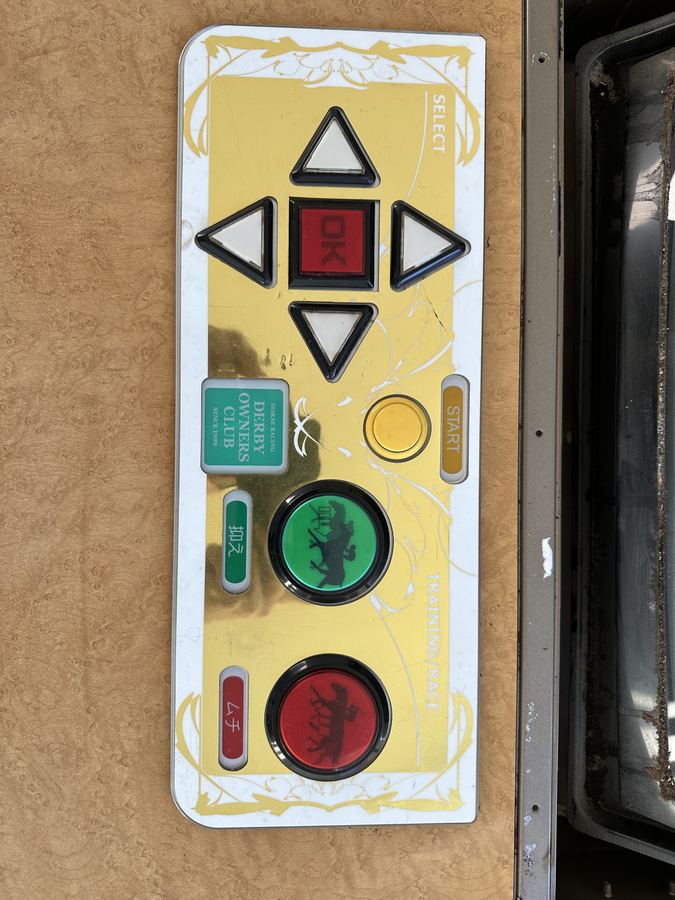
Each seat has the same short list of inputs: a direction plate, a small cluster of buttons, and the card reader that makes the whole game work. The panel is the part players actually touched, so it is the part that wears, and it is where a restored cabinet either feels right or does not.
Panels vary between production runs, which is worth knowing before you order a replacement overlay for a machine you have not measured.
These cabinets were built around CRTs, and a CRT is the one part of an arcade machine that is genuinely hard to replace in 2026. Original tubes are heavy, increasingly scarce, and not something you can order new. Running modern panels instead keeps a machine alive and playable, at the cost of some of how it looked in an arcade. Both choices are defensible and this project has made both.
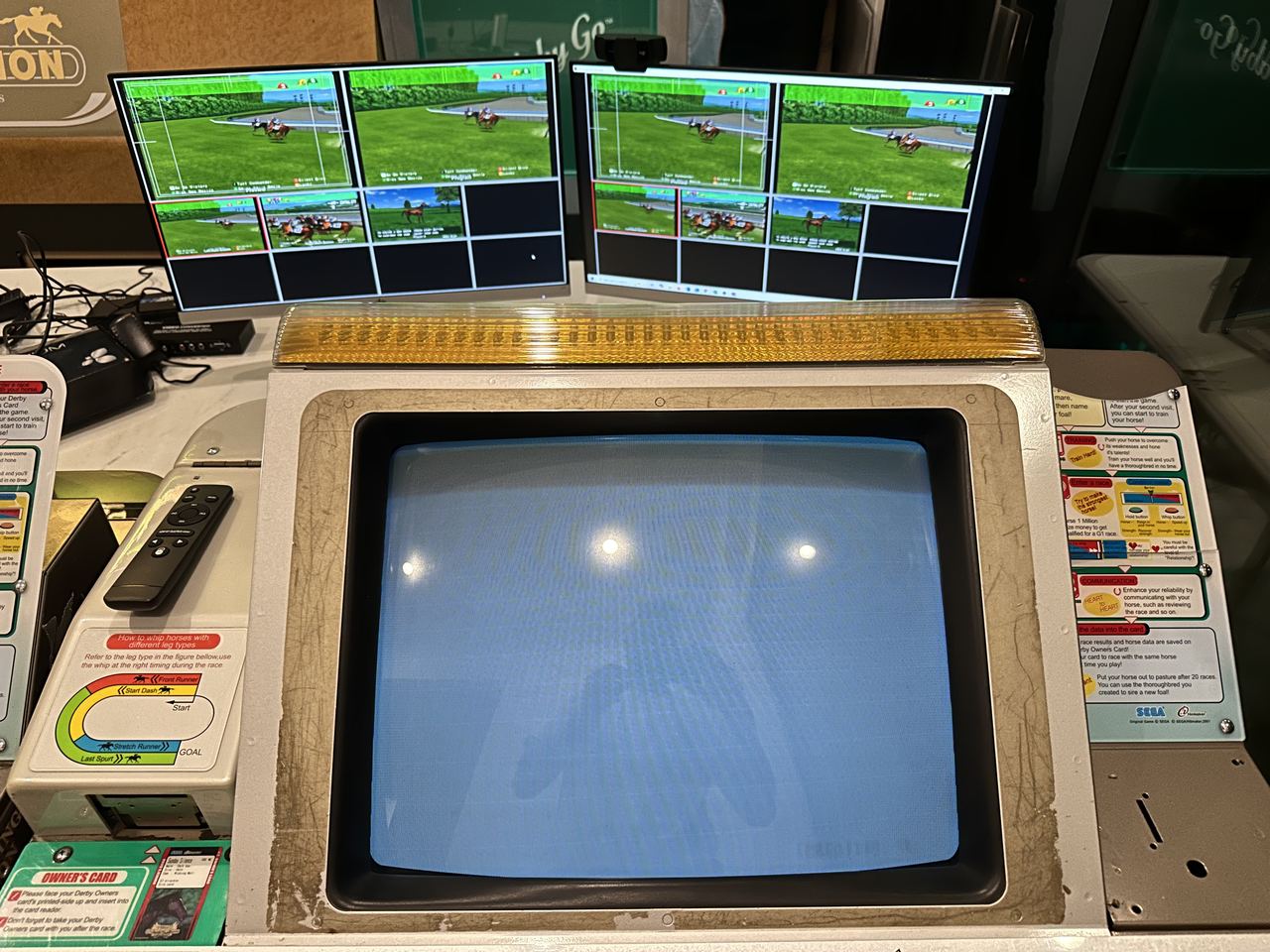
Linked cabinets are fussy about order. The master expects its satellites to be there when it goes looking for them, and a seat that joins after the master has finished counting simply does not get into the race. Anyone who has brought up a row knows the symptom: eight machines powered on, six in the game, two sitting at a screen that will not join.
The same rule turns up in the emulated rigs this project runs, where satellites have to be started on a stagger for the mesh to come up whole. It is the single most common reason a row does not work, and it is almost never a broken machine.
Every version of this game is preserved and playable without owning a cabinet, which raises a fair question: why keep seven setups of it running at all?
Because the cabinets answer questions nothing else can. Career data on a real machine lives in battery backed memory that emulation never persists. The card readers behave in ways a file on disk does not. When the software work runs into a wall, the way out is usually a physical machine and a card in a slot.
 DOC
DOC