A linked-cabinet Sega arcade game with no official way left to play it, kept running by the people who remember it. Here is what was saved, what it took, and what is still missing.
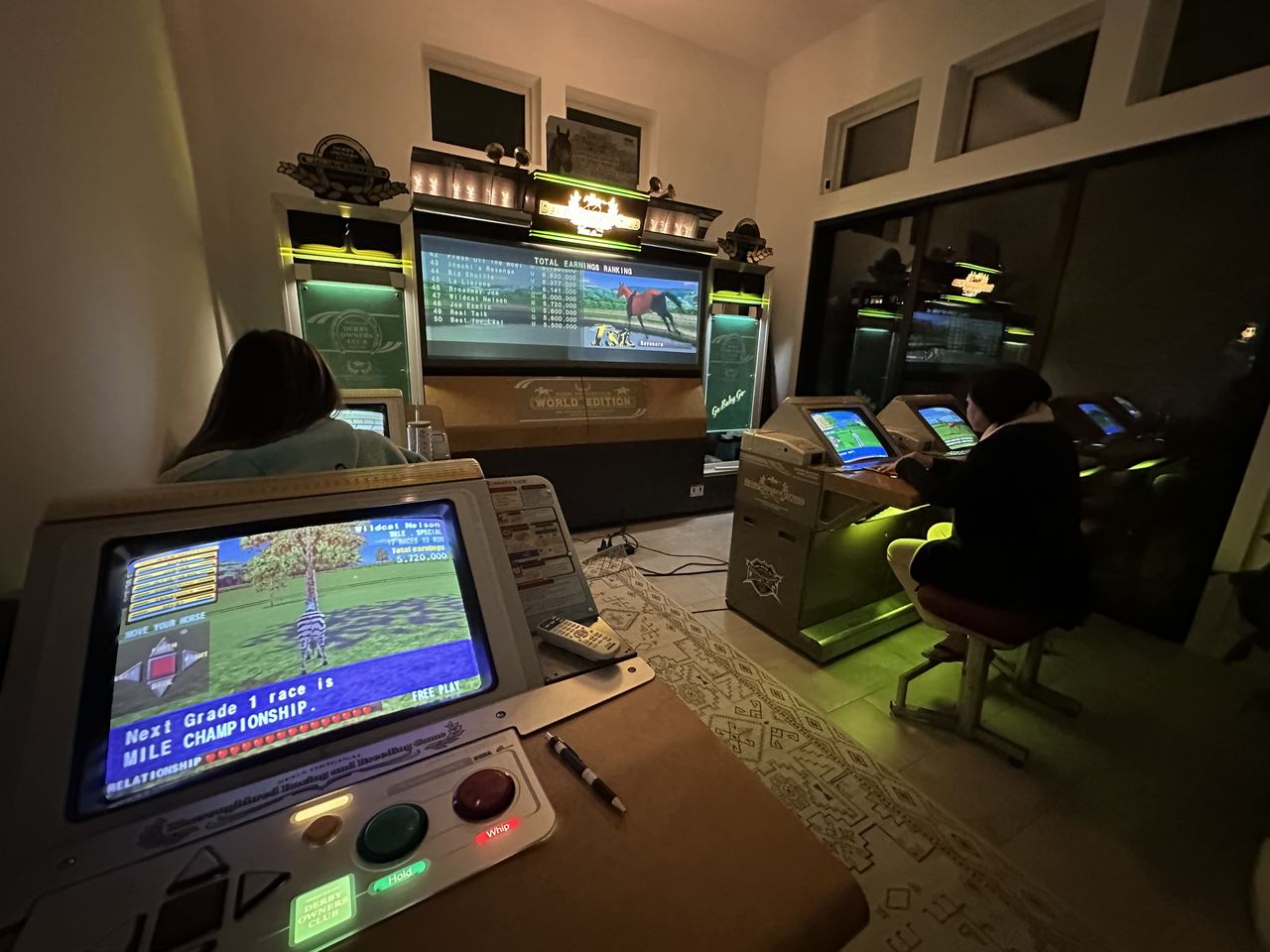
Derby Owners Club arrived in arcades in 1999. You raised a racehorse: fed it, trained it, named it, and carried it home on a magnetic card so it would still be yours next week. Then you sat down in a row of linked seats and raced it on a shared screen the size of a doorway. Cabinets shipped in four-, six- and eight-player variants, so a full eight-seat row meant seven other people riding against you at once, each at their own satellite.
It never got a console port. There were two attempts to bring it home, both Japan only and both online services rather than games you could own: Derby Owners Club Online on PC in 2004, and Derby Owners Club -Next Furlong- on phones in 2012. Sega switched the PC servers off in 2006 and the mobile ones in January 2019. So every official way to play this game, in an arcade or at home, has now been turned off. When the cabinets left the arcades, the horses on those cards had nowhere left to run.
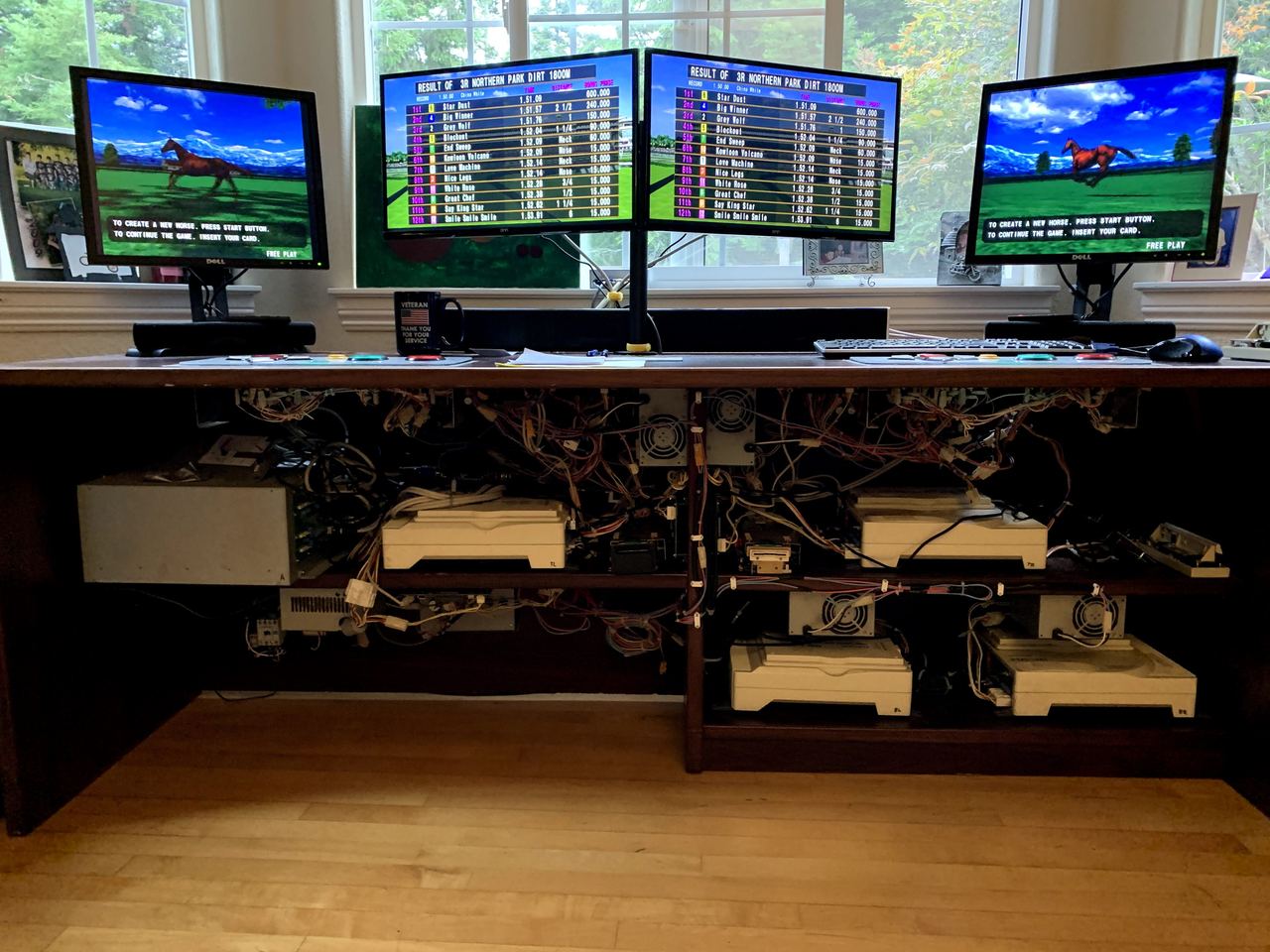
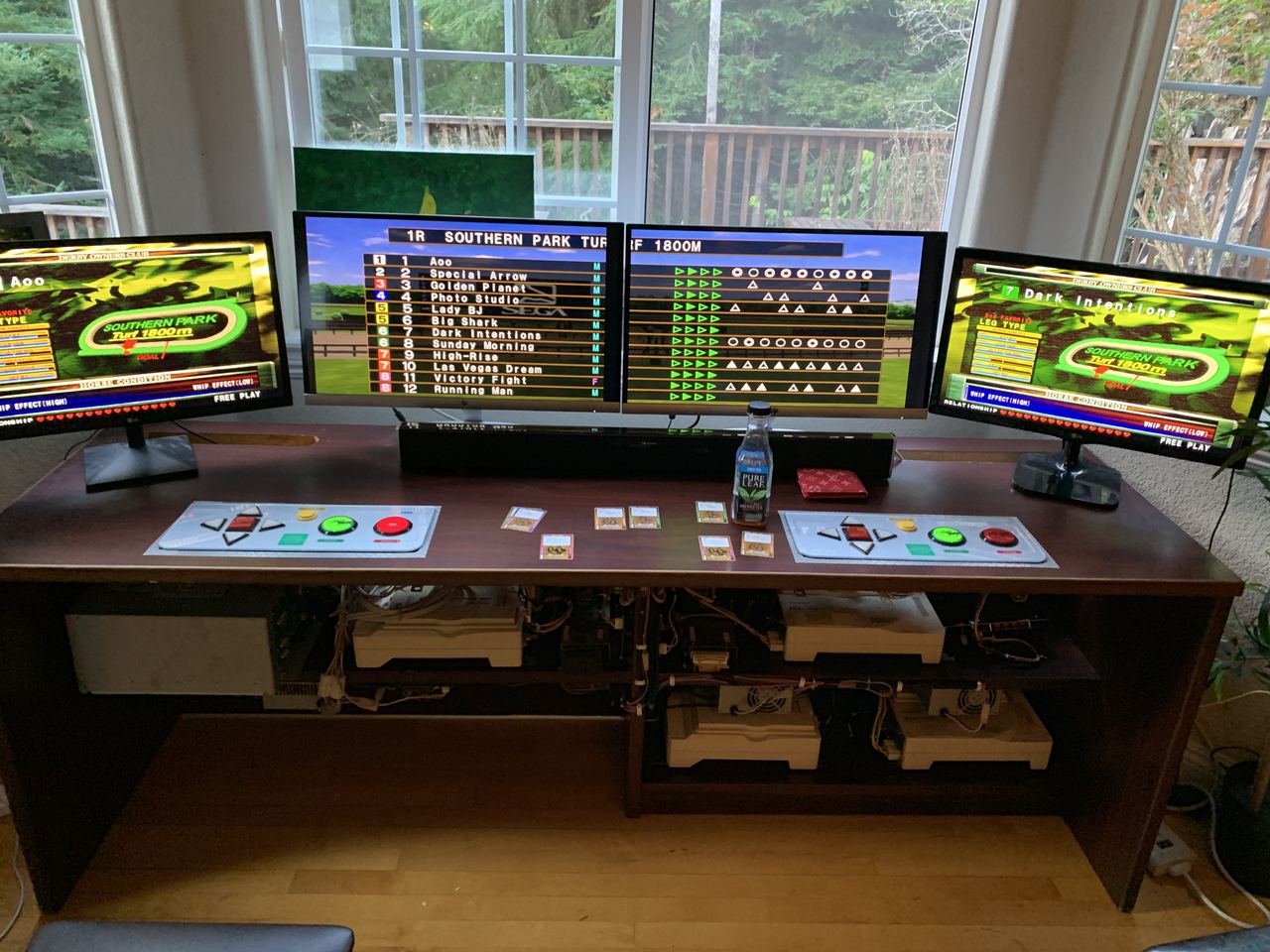
Seven complete Derby Owners Club setups live here: two full eight-seat rows, two full four-seat rows, a four-player streaming rig, and two more built up from the parts without their cabinets. An eight-seat row alone is ten boards once you count the main unit properly, so that is a lot of Sega hardware in one building.
It came the way most surviving arcade hardware does: on a truck, in pieces, having sat somewhere dark for a decade.
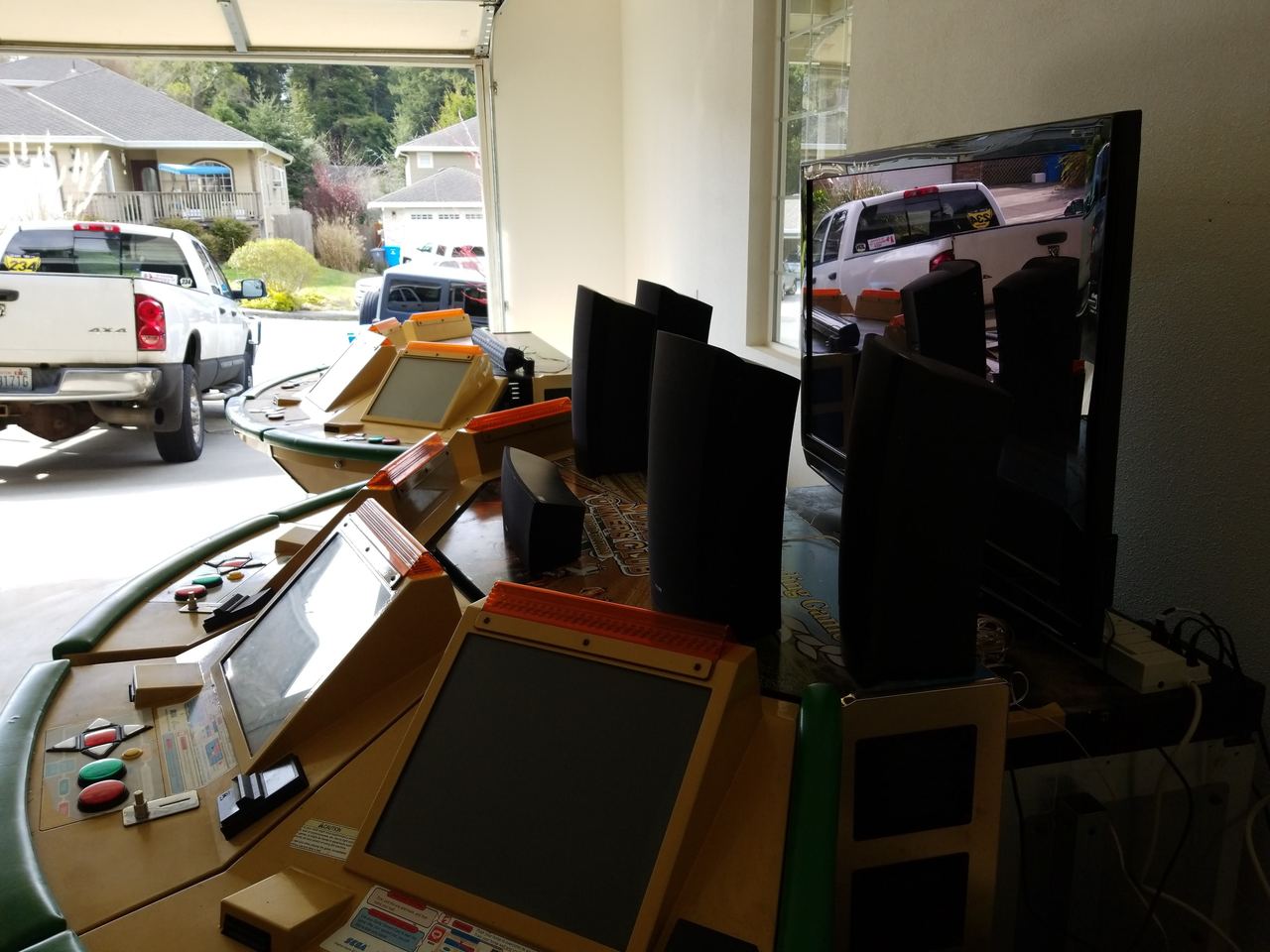
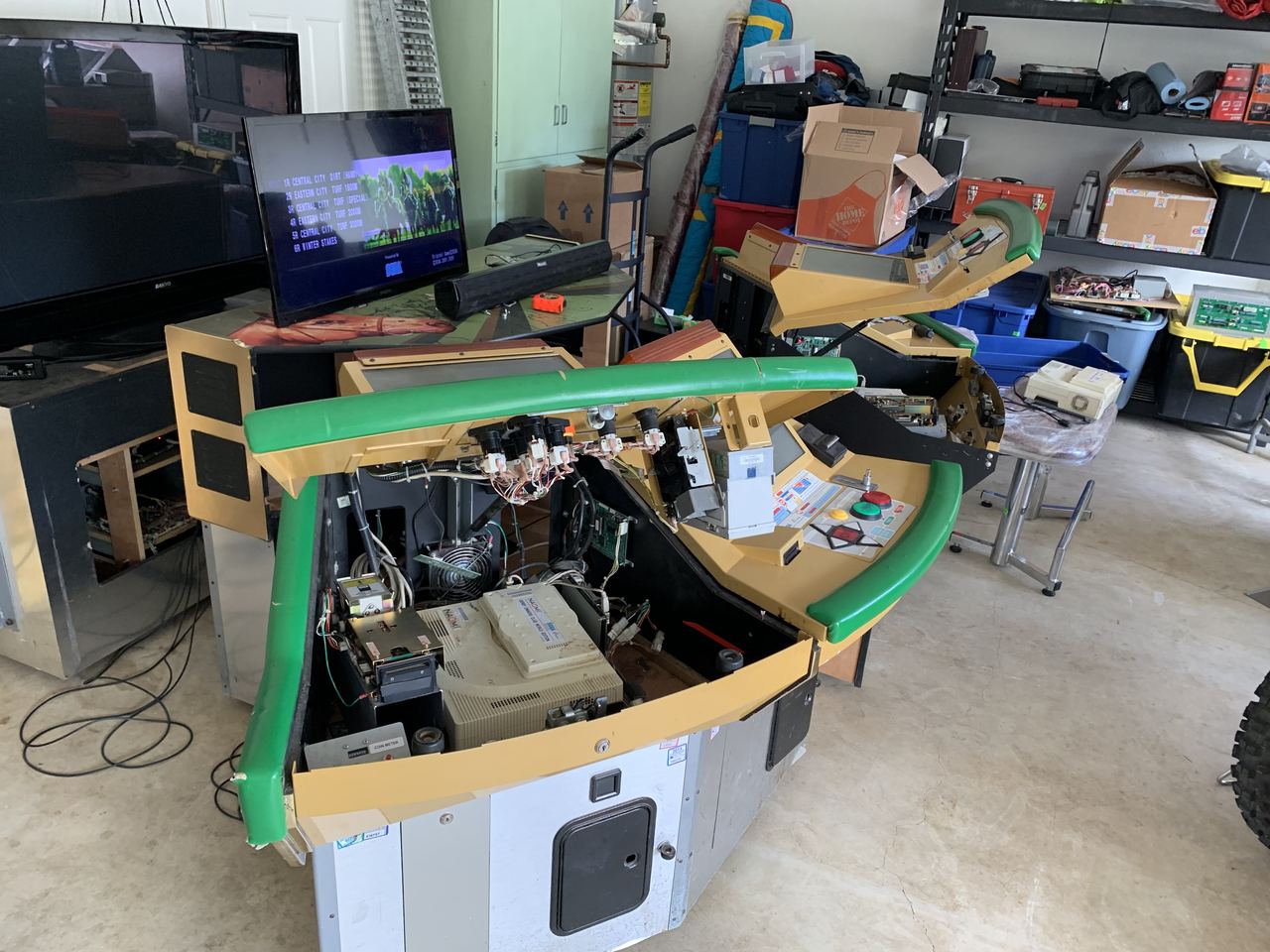
Derby Owners Club is not one machine. A main unit drives the two-screen race board, and each player seat is a separate arcade board on a network link. A full eight-player row is ten boards behaving as one, because the main unit is itself a stack of two. They all have to agree on the same race, frame by frame, or the row does not run at all. Sega sold it in four-, six- and eight-seat configurations, and each one links differently.
That is the part that kept it out of reach. Getting a full row to boot, link and stay in sync meant learning how the master hands out seats, why a satellite that joins late is refused, and what the mesh does when one board drops. A single cabinet is an emulation problem; a linked row is a networking problem wearing a cabinet costume.
A horse lives on a magnetic stripe as a few hundred bytes. Nothing about that layout was documented, so every byte had to be worked out by hand: stats, coat, pedigree, running style, and the record of every race it has ever run.
That map is what makes a saved horse portable at all, and it is published openly, along with the tools built on top of it: card readers and differs, breeding and feeding advisors, roster and track browsers. It is the manual the game never shipped with.
The Japanese releases needed their own pass. Their cards use a different marker and store kana names in fixed slots, so a World-Edition reader simply refuses them. Decoding that is what brought the Japanese versions back alongside the World ones.
Japanese players had already worked out much of how this game behaves, years before anyone could read the ROM. Their sites are mostly gone now. What the Japanese community knew → collects that work, in both languages, with each claim marked according to whether the ROM bears it out.
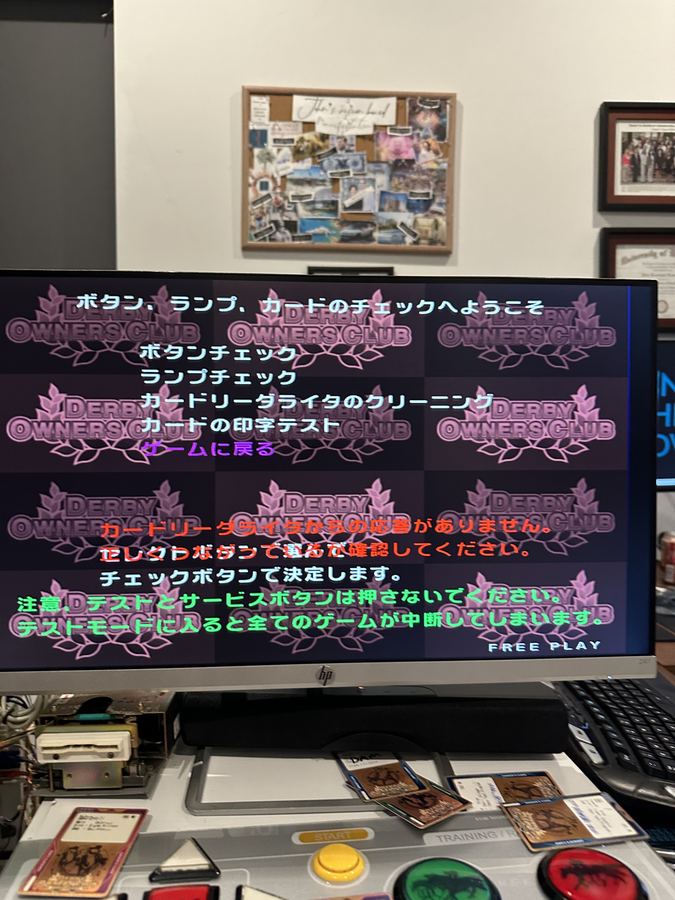
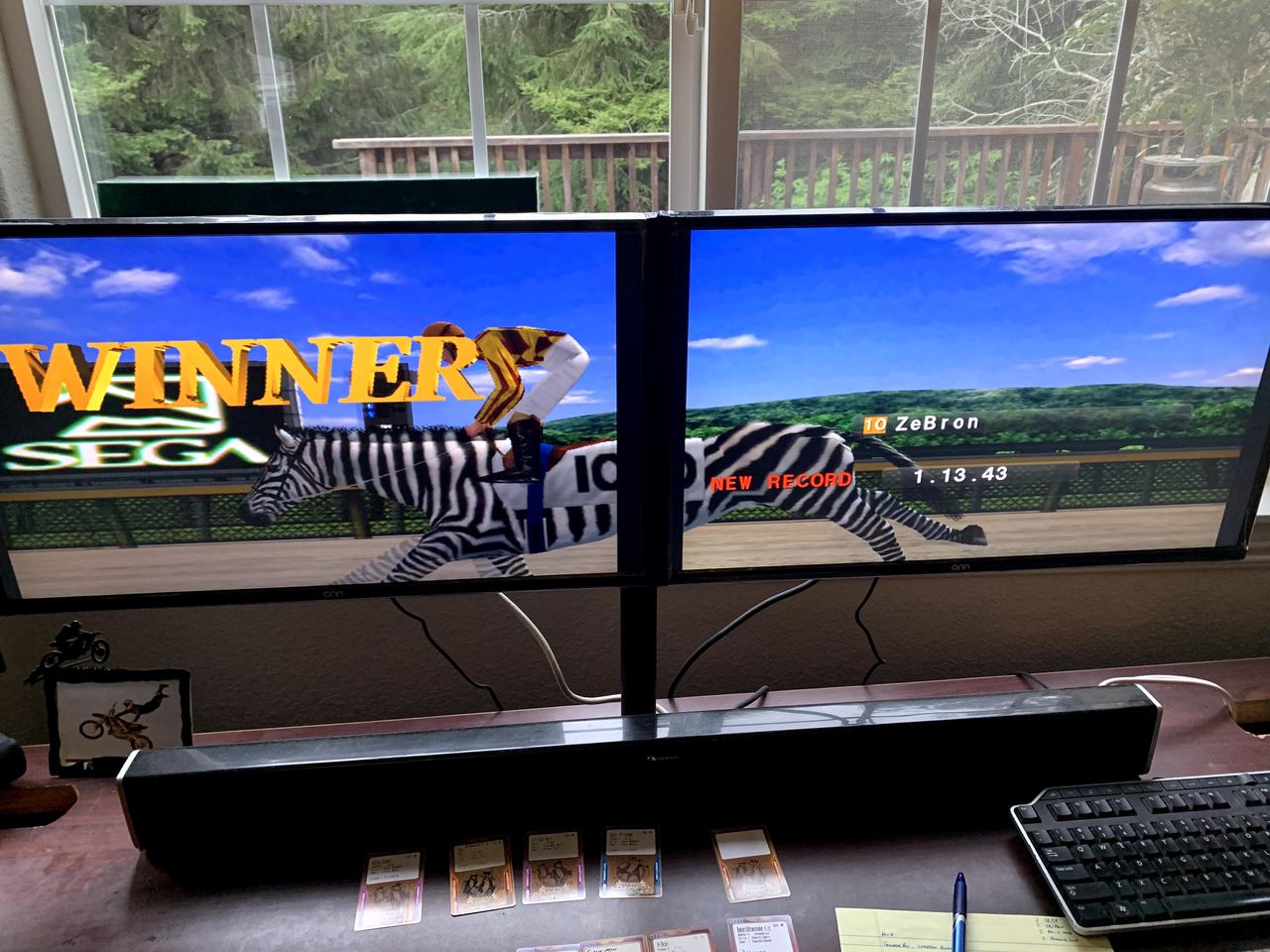
Four versions are preserved, running, and able to read and write their own cards: the two World Edition revisions and both Japanese releases.
| World Rev C | World Rev D | DOC 2000 | DOC '99 | |
|---|---|---|---|---|
| Program ROM | epr-22336c | epr-22336d | epr-22284a | epr-22099b |
| Horse record | 32-byte | 32-byte | 32-byte | 28-byte |
| Roster records | 244 | 244 | 244 | 244 |
| Card format | decoded | decoded | decoded | decoded |
| Runs + saves home | yes | yes | yes | yes |
Every row above was read out of the ROM bytes and re-checked independently, not taken from documentation. Rev C and Rev D turn out to be byte-identical across all 244 roster records, which settles a long-running argument about whether the later revision quietly changed the horses. It did not.
The honest part. Some of this needs hardware nobody has been able to put in front of it yet, and if you can help with any of it, we would like to hear from you.
Derby Owners Club is still Sega's. Nothing on this site distributes the game.
The Host Pack set cabinets up and linked them together, then pointed at game files that you provide. We do not host them, mirror them, or help anyone find them, and we are not going to start. That is a deliberate choice, not an oversight. We stopped handing the pack out in August 2026.
Racing is free and always has been: no ads, and nothing that decides a race behind a paywall. Running the servers and the machines costs real money, and what members chip in is what covers it. What members pay for is software we wrote ourselves, never Sega's game.
Derby Owners Club is a strange, wonderful, nearly-lost arcade game. Getting it running again, with the linked satellite cabinets and all, took a lot of reverse-engineering and stubborn tinkering. It is shared so other fans can experience it again, the way we remember it.
There are people in our Discord who last played this in a mall twenty years ago and assumed they never would again. That is the entire point.
Ride on.
John
 DOC
DOC